Power-user Smart Fields is a feature of the Power-user add-in for PowerPoint that lets you insert variables at multiple places in a presentation, then update them centrally. Use Smart Fields for cross-references in a presentation, for dynamic templates with input fields, or simply to avoid repeating the same modification at multiple places in your files.
In short
- Where: on the Power-user tab of the PowerPoint ribbon, click the Smart Fields button to open the Smart Fields pane.
- What you get: variables such as "Client name", "Presentation Title" or "Confidentiality classification", inserted wherever you need them and still connected to a single value.
- How it stays current: edit the value once in the Smart Fields pane and press Enter: every instance in the presentation is updated.
- For templates: users who open a template shared via Themes are prompted with an input form to fill in the Smart Fields.
In this article
How to create and insert Smart Fields in PowerPoint
To open the Smart Fields pane, go to the Power-user tab of the PowerPoint ribbon and click the Smart Fields button.
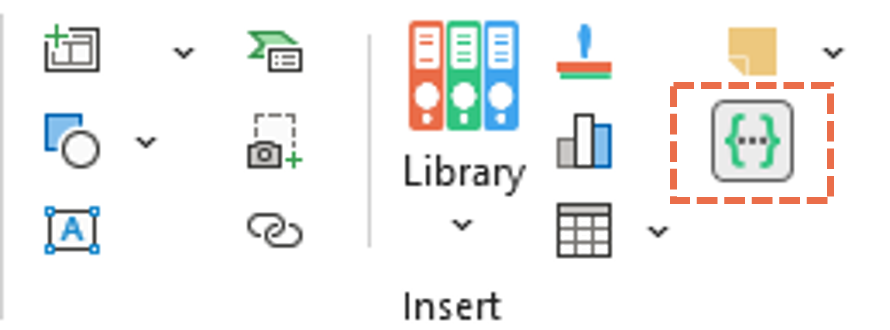
Smart Fields button in the Insert group of the Power-user ribbon in PowerPoint
The Smart Fields pane opens and lists the Smart Fields of the presentation, with their name, value and usage.
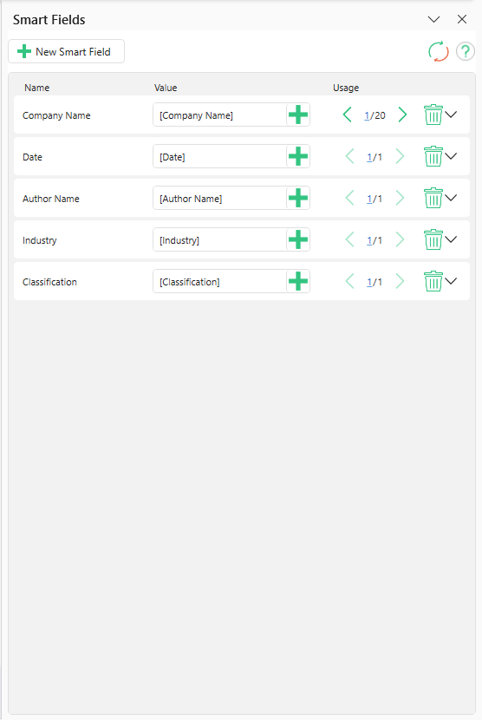
Smart Fields pane in PowerPoint listing each Smart Field with its name, value and usage
Then create a Smart Field and insert it in your slides:
- Click New Smart Field. A new Smart Field, i.e. a new variable for your presentation, is added to the list.
- In Name, give your variable a name, for instance "Presentation Title" or "Company Name".
- In Value, type the current value of the variable. For instance, the "Presentation Title" variable can take the value "Q3 results presentation".
- Select a shape and click the + button to insert the Smart Field in the selected shape. The current value is inserted, and it stays connected to the variable.
- Insert the same Smart Field at every other place where you need it, on any slide.
How to update Smart Fields in PowerPoint
Update Smart Fields from the task pane
You can edit the value of a Smart Field at any time:
- Open the Smart Fields pane.
- In the Value column, edit the value in the text box. For instance, replace "Q3" with "Q4".
- Press Enter. The new value is applied to every instance of the Smart Field in your presentation.
Prompt template users with an input form
When creating templates for your key documents, you may want to use Smart Fields so that users can simply replace the variables with the value they need, e.g. replace "Company Name" with the name of the client for whom you are preparing a business proposal.
When a document with Smart Fields is made available to users via the Themes functionality, an input form opens whenever a user opens the document. The Smart Fields Form lists each Smart Field with its Name and Value, and asks the user to fill in the information to automatically update the template.
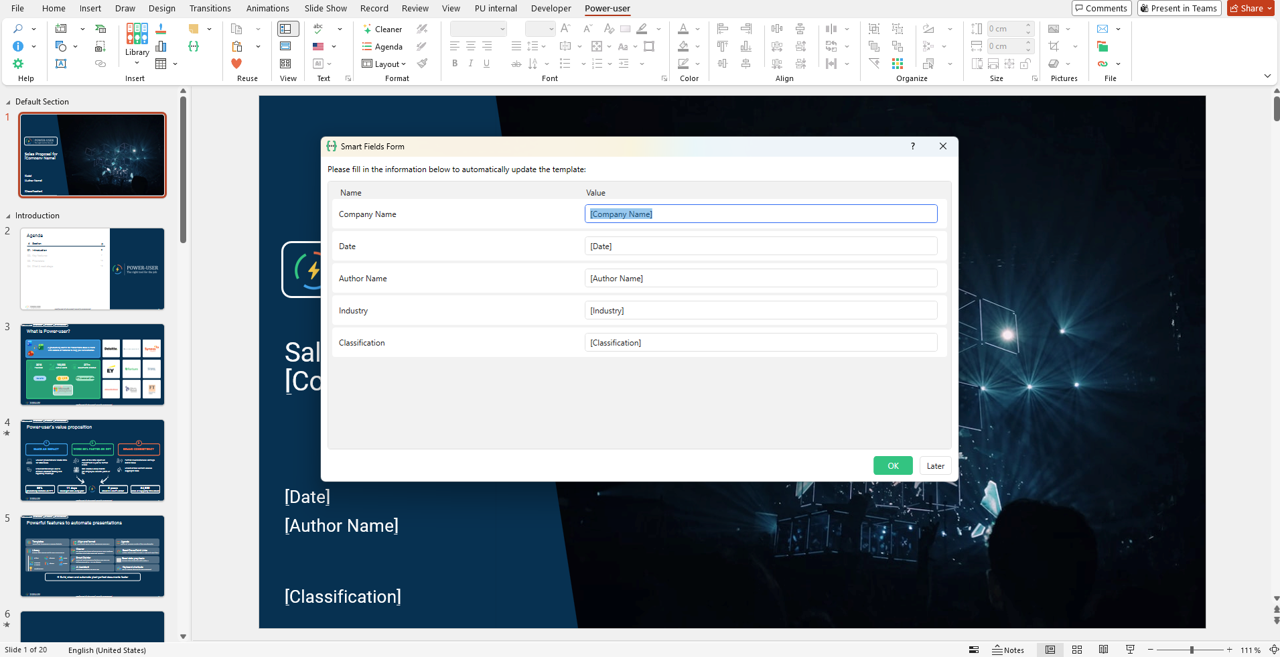
Smart Fields Form prompting the user for the Smart Field values when opening a presentation template
This way, users don't have to know or guess that the presentation contains variables: they are directly prompted for these variables when they open the template.
How to find or delete a Smart Field
In the Smart Fields pane, the Usage column shows where each Smart Field is used:
- Find every instance: use the arrows around the counter (for instance "< 1/10 >") to navigate between each instance of the Smart Field, so you can see everywhere it was inserted.
- Delete: use the bin icon to delete the Smart Field for one specific instance or for all instances in the presentation.
Why use Smart Fields in PowerPoint
- Real variables in your presentation: create a "Client name", "Industry", "Presentation Title", "Project name" or "Confidentiality classification" variable and use it on different slides, even on all slides.
- Central update: manage each variable in one place and edit its value across the entire presentation at once, instead of finding and updating every occurrence manually.
- Faster template customization: let users fill in a form asking for the "Client Name", "Presentation Title" or "Confidentiality classification", and let Power-user automatically fill in the template based on these values.
Frequently asked questions about Smart Fields in PowerPoint
What are Smart Fields in PowerPoint?
Smart Fields are variables provided by the Power-user add-in for PowerPoint. You insert a Smart Field such as "Client name" at multiple places in a presentation, then manage its value centrally: editing the value once updates it everywhere it was inserted.
How do I create a variable in PowerPoint?
With the Power-user add-in for PowerPoint, open the Smart Fields pane from the Power-user tab, click New Smart Field, then give the variable a name and a value. Select a shape and click the + button to insert the Smart Field in that shape.
How do I update the same text on multiple slides in PowerPoint?
Insert the text as a Power-user Smart Field. In the Smart Fields pane of the Power-user add-in for PowerPoint, edit the value in the Value column and press Enter: the new value is applied to every instance of the Smart Field in the presentation.
How do I see where a Smart Field is used in a presentation?
In the Smart Fields pane of the Power-user add-in for PowerPoint, use the arrows in the Usage column to navigate between each instance of the Smart Field and see everywhere it was inserted.
How do I delete a Smart Field in PowerPoint?
In the Smart Fields pane of the Power-user add-in for PowerPoint, you can delete a Smart Field for one specific instance or for all instances in the presentation.
Can a PowerPoint template ask users to fill in fields when they open it?
Yes, with Power-user Smart Fields. When a document with Smart Fields is made available to users via the Power-user Themes functionality in PowerPoint, an input form opens whenever a user opens it and prompts them for the Smart Field values, which are then filled in across the template.
Was this article helpful?
That’s Great!
Thank you for your feedback
Sorry! We couldn't be helpful
Thank you for your feedback
Feedback sent
We appreciate your effort and will try to fix the article